
Connected
World wiki
Locations, factions, lore, calendars, and mysteries stay linked to the sessions where they mattered.

What it replaces
Tavern Scribe can sit beside the tools your group still loves, but the campaign memory stops being scattered between apps, pins, docs, exports, and half-remembered conversations.
Campaign memory
The magic is not having every feature in a checklist. It is what happens when each part of the campaign can point to the rest.
Locations, factions, lore, calendars, and mysteries stay linked to the sessions where they mattered.
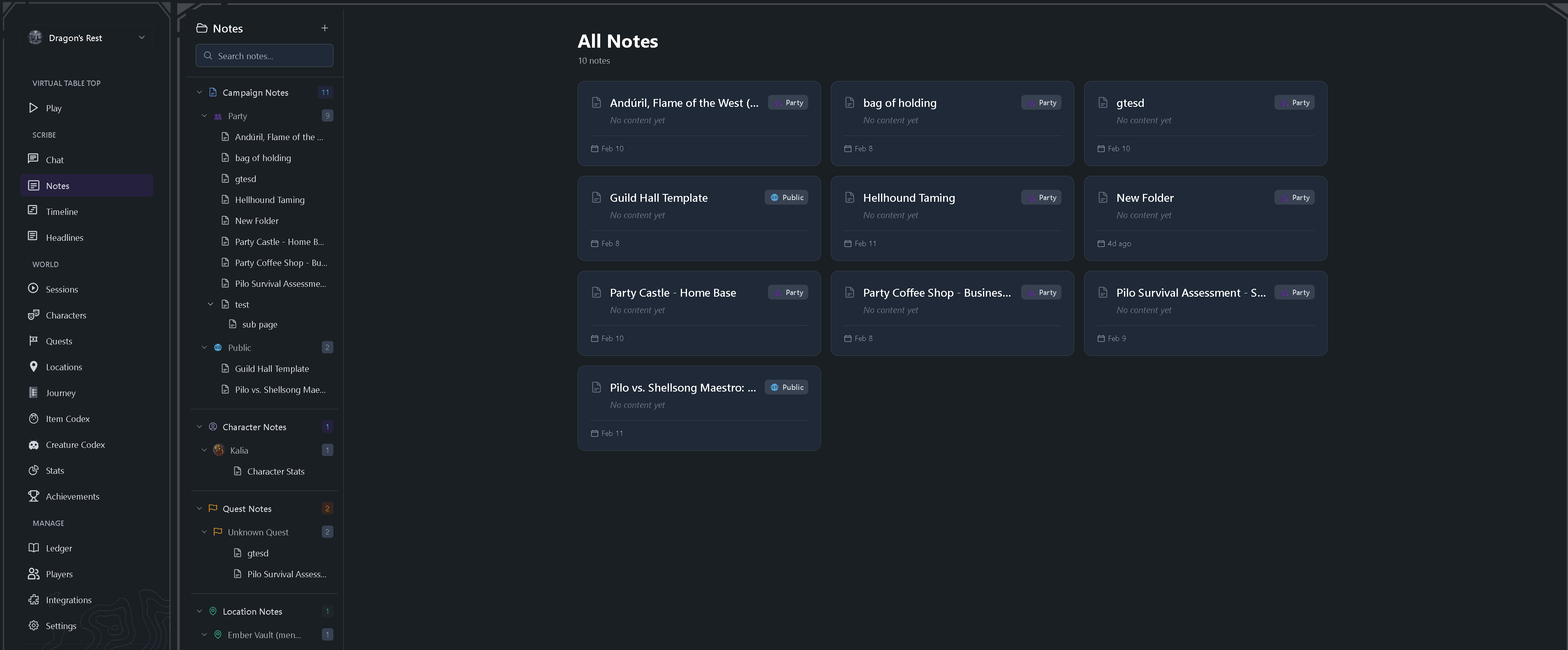
Scenes, secrets, hooks, and notes sit beside the people, places, and quests they affect.
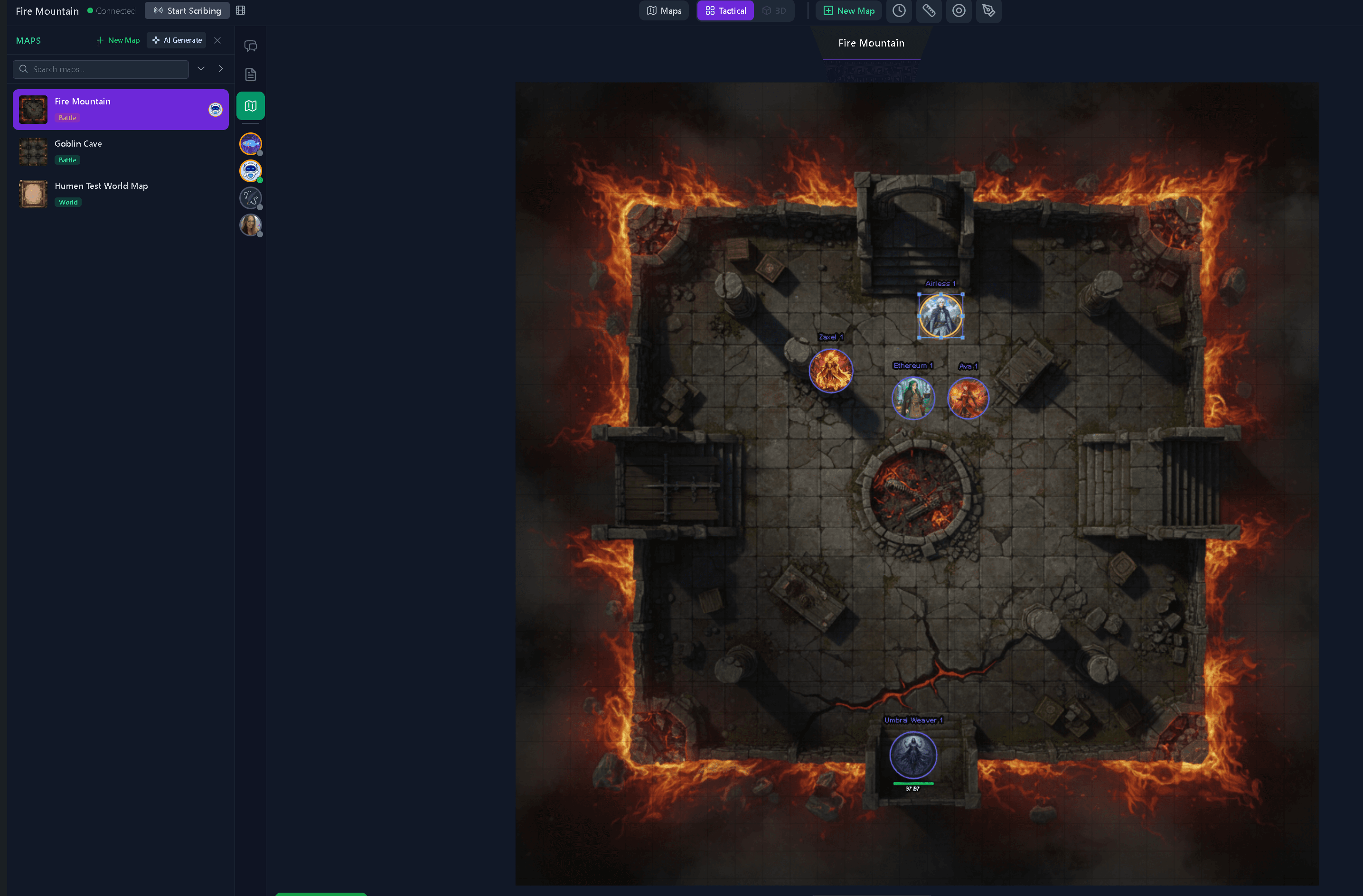
Maps, tokens, initiative, dice, music, and shared notes keep the table aligned while the game is moving.
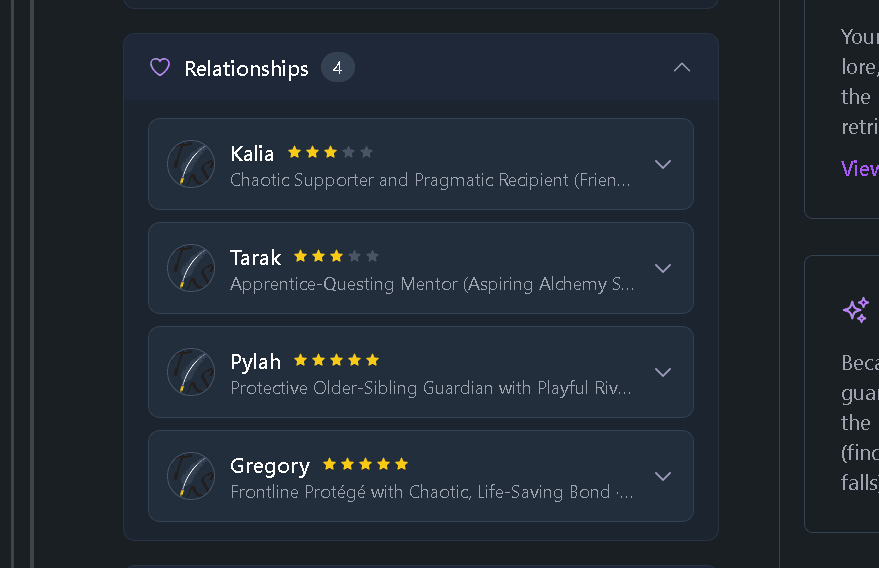
Motives, secrets, party ties, and recurring faces stop living only in the GM's memory.
Give players what they know, keep GM-only context private, and keep both versions of the world consistent.
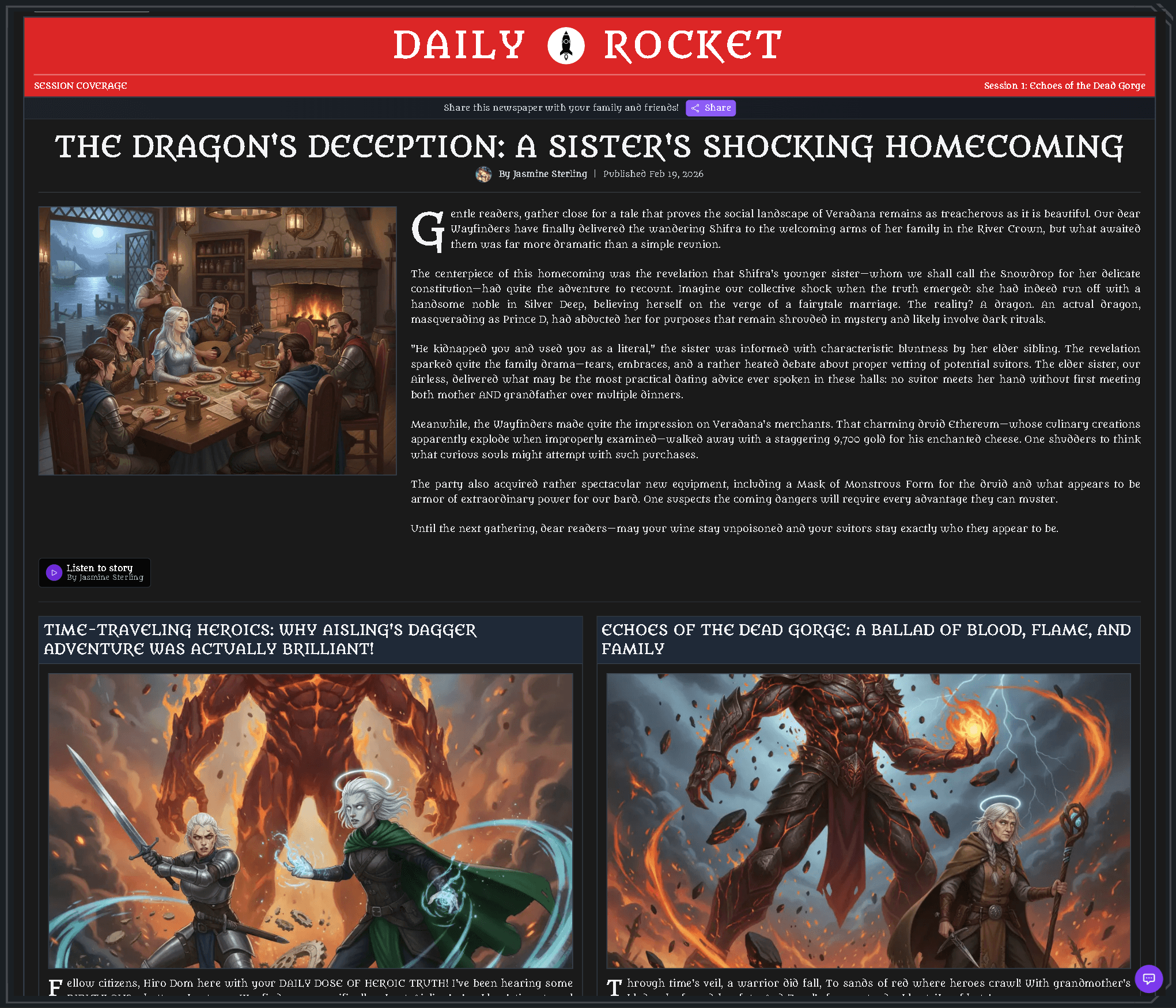
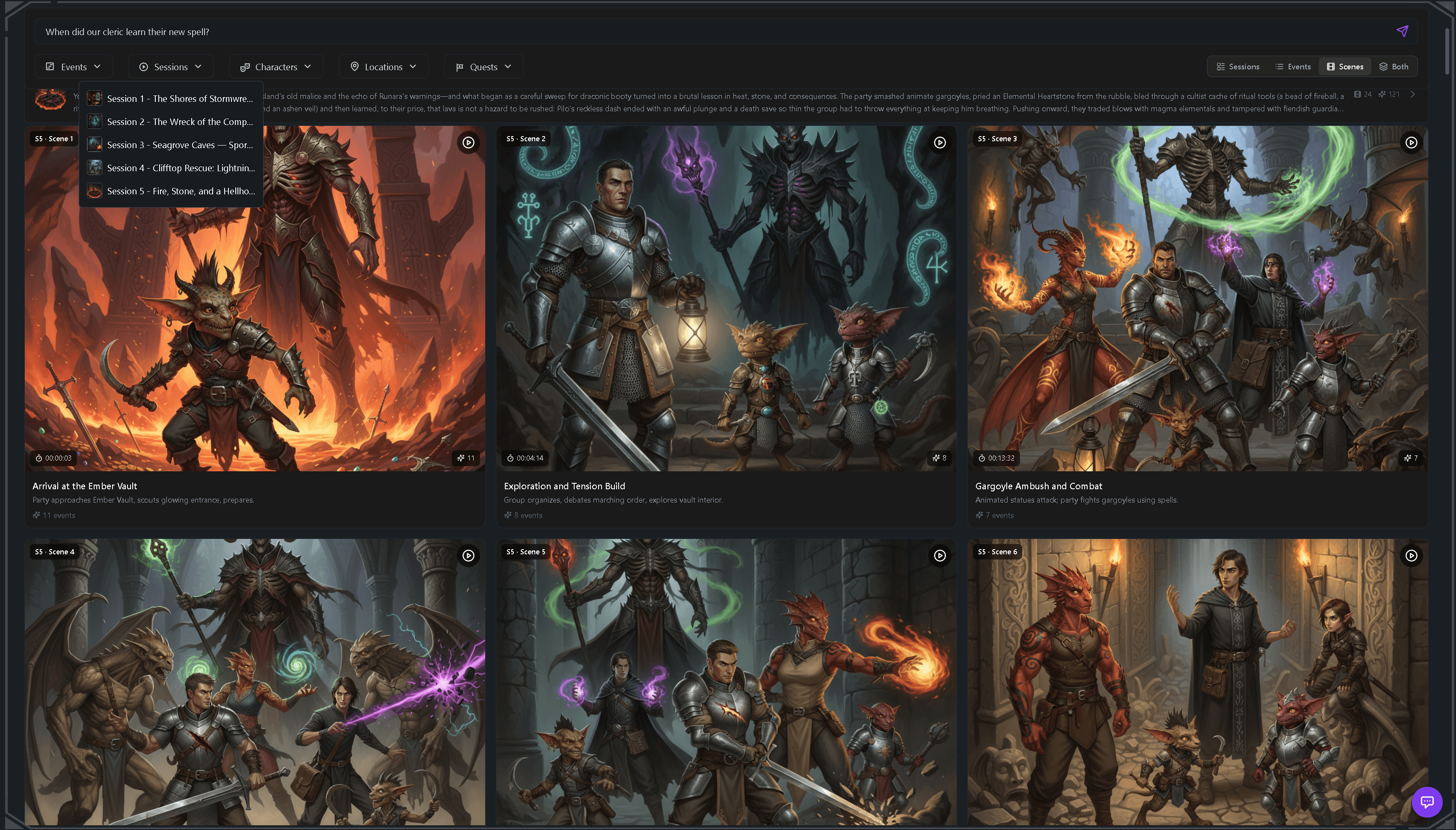
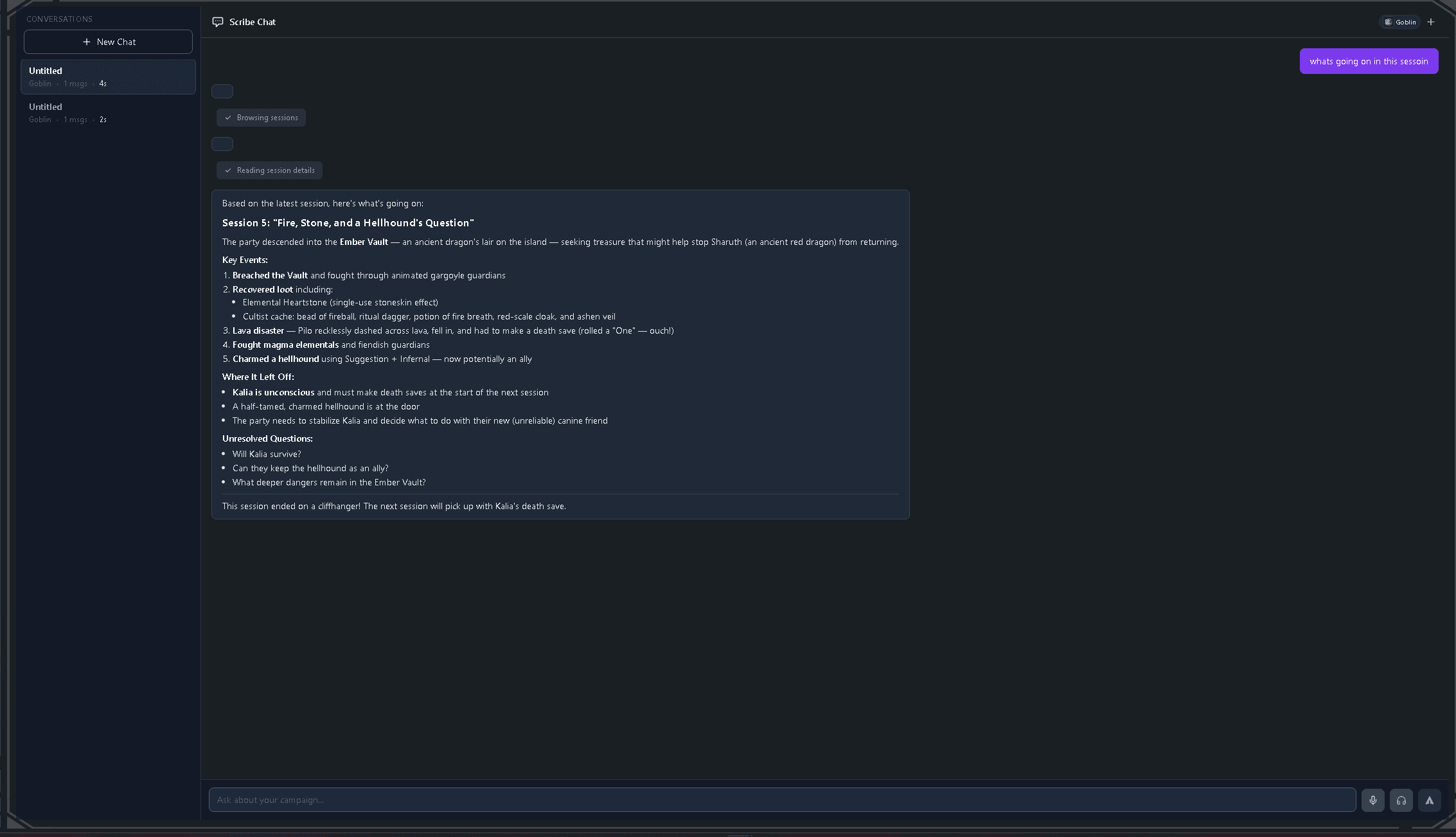
Every session can become searchable memory, a shareable recap, and fuel for the next night of prep.
One workspace
Your VTT, character builder, or favorite generator can still exist. The difference is that the campaign has one canonical home for what happened, what changed, and what the players actually know.
A quest note in one doc, the NPC motive in another, loot in a sheet, and the real decision buried in chat.
The session, quest, NPC, loot, recap, and player-facing truth all connect back to the same campaign memory.
Build the canon
Start with the free workspace, then bring in maps, notes, recaps, characters, and the history your table needs to keep playing with confidence.
