

TL;DR — Quick Answer
To write a D&D session recap, lead with where the session ended and what the party said they'd do next, then list quest updates, character changes, and loot in short bullet points — skip the blow-by-blow. Write it within a day while the table's memory is fresh, or use a tool that generates the recap straight from your session recording.
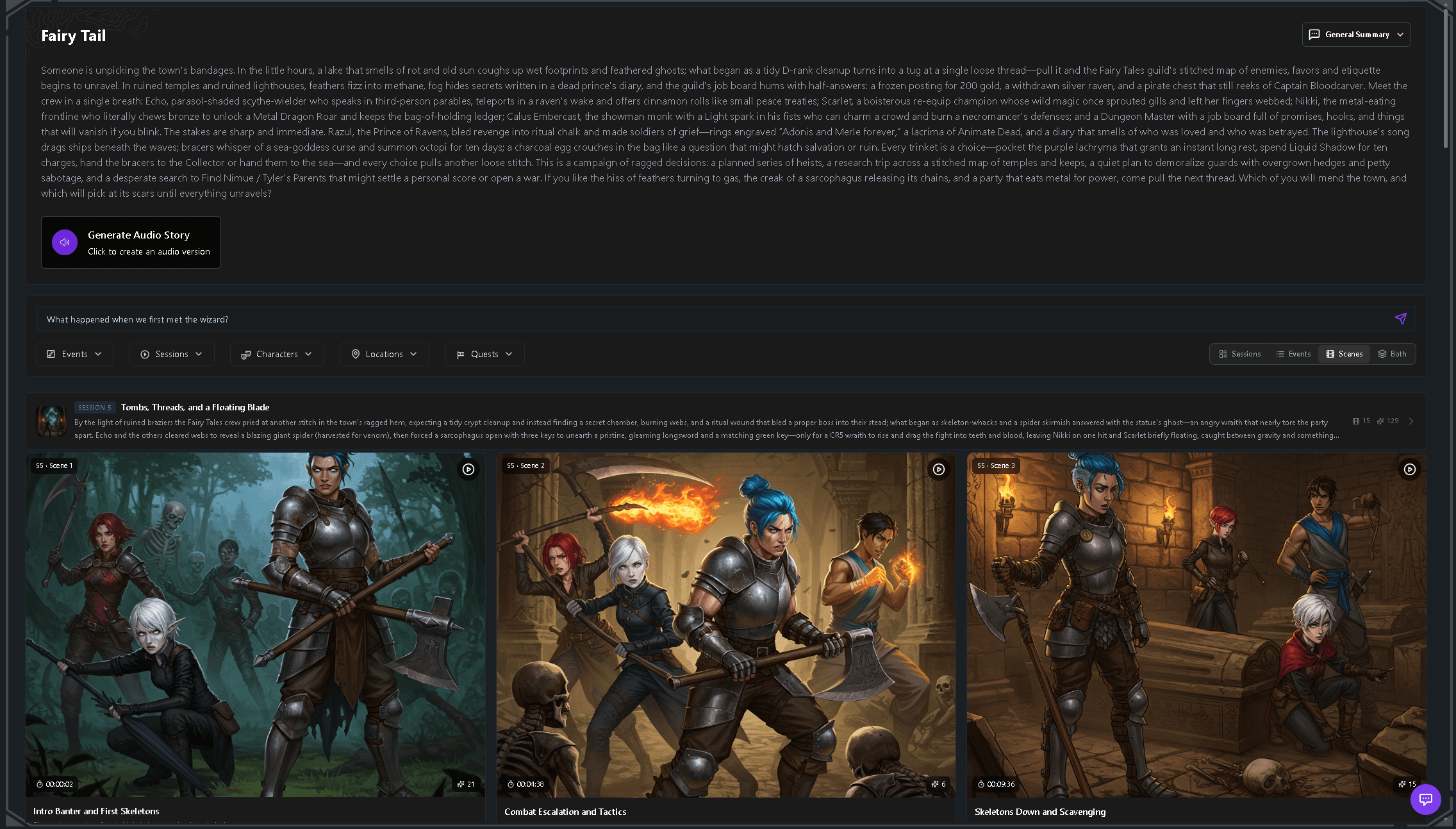
Looking for the tool rather than the writing? See the AI D&D session recap tool — upload the audio or video and skip writing this yourself.
A recap's only job is to answer one question fast: "what do I need to remember before next session?" Most recaps fail that job by trying to be a transcript instead — four paragraphs of play-by-play that nobody, including the DM who wrote it, rereads. Here's a shape that works, a method for writing it in ten minutes, and a template you can copy right now.
What goes in a good D&D session recap (and what to leave out)?
A recap covers five things, in order of what players actually need:
- Where the session ended. The literal last scene — this is next session's cold open.
- What the party said they'd do next. Their stated plan, not your guess at it.
- Quest updates. What's newly active, what closed, what's one step closer.
- Character changes. Who leveled, who's hurt, who learned a secret about themselves.
- Loot and promises. What the party is carrying, and what they owe or are owed.
Leave out the combat math, the rules arguments, and anything that happened but didn't change the story. A recap is a summary of consequences, not a record of every die roll.
How do you start writing a session recap?
Start from the ending, not the beginning. Open your notes (or your memory, if you're writing same-night) and find the last thing that happened at the table — the cliffhanger, the door that didn't open, the NPC mid-sentence. That's your first line. Readers who missed the session need to know where things stand before they need to know how you got there; burying the ending on page two of a recap is the single most common reason players skim past it.
Write the opening as two or three sentences, not a paragraph. "The party found the bell missing from Harrowmere's chapel, and Brother Aldric finally admitted why" tells a returning player everything they need before bed. It's the same instinct journalists call the inverted pyramid: put the most important fact first, then back-fill detail for whoever keeps reading.
The 10-minute recap method
If you write the recap the same night (best) or the next morning (still good), this takes about ten minutes:
- Write the ending first — two sentences, the last scene.
- List what the party said they'd do — their plan, verbatim if you can remember it.
- Scan your quest log — one line per quest that moved: opened, advanced, or closed.
- Scan your characters — one line per PC or NPC whose status changed.
- List loot and promises — anything of value the party is holding or owes.
- Stop. A recap that takes thirty minutes is doing a transcript's job.
The method only gets hard when the quest and character scanning means flipping through a notebook or three different docs. That's the part worth automating — a session recording turned automatically into a timeline of what happened, searchable at the moment you're writing the recap instead of reconstructed from memory.
A copy-paste D&D session recap template
Steal this structure. Fill in the blanks, delete what doesn't apply, and keep every entry to one line where you can.
Session [#] — [one-line title]

Where we ended:
-

Party's stated next move:
-

Quest updates:
-

Character updates:
-

Loot & promises:
-

One thing to remember next session:
-
That last line is the one DMs skip and regret — the single detail (a name, a debt, a tell) that's easy to forget and expensive to lose.
Should you write recaps yourself, or let AI do it?
Writing your own recap costs ten minutes if you do it promptly, and it's a fine habit for a short campaign or a DM who likes the ritual. The cost shows up in long campaigns: by session 25, recap-writing competes with actual prep time every single week, and the first thing to slip is usually the quest and character scanning — the part that takes the most digging. We covered that failure mode in more depth in the most exhausting part of session prep isn't the prep.
If your table already records sessions, that scan doesn't have to be manual. Upload the session's audio or video to Tavern Scribe and the AI generates a written recap, a chronological event timeline, character updates, and quest progress automatically — every event linked to the exact timestamp in the recording where it happened, so "did that actually happen?" is a ten-second clip instead of a debate. The core campaign workspace — notes, quests, characters — is free with no time limit; AI processing runs on silver, and your first campaign starts with 100 free silver, then subscriptions from $10 to $100 a month or one-time packs the table can chip into.
Either way, the shape above holds: lead with the ending, list what changed, skip the transcript.
FAQ
How long should a D&D session recap be?
Short. Five to ten bullet points across the categories above is usually enough for a weekly campaign — long enough to jog memory, short enough that players actually read it before next session. If your recap runs longer than a page, you're probably writing a transcript.
Who should write the session recap?
Whoever will actually do it consistently — traditionally the DM, but a player who enjoys writing works just as well, and rotating the job keeps it from becoming one person's unpaid homework. If nobody wants the job, that's a sign to automate the quest and character scanning instead of assigning it to someone.
What's the difference between a recap and a transcript?
A transcript is the full word-for-word record of the session — four hours of crosstalk included. A recap is the story distilled: what changed, what's next, and nothing else. A transcript is raw material; a recap is what your table actually rereads.
Can AI write a D&D session recap for me?
Yes. Tools built for it — including Tavern Scribe — turn a recording of your session into a written recap, a timeline, and updated quest and character records automatically, with no one at the table taking notes. We compared the main options, AI and manual, in the best D&D session notes apps. Ask the whole table before you start recording; every AI recap tool depends on that session-zero conversation.
How do I write a recap if I didn't take notes during the session?
Reconstruct from the ending backward: what's the last thing that happened, and what would have had to happen for the table to get there? Ask your players — between four or five memories, the quest and loot details usually surface. It's slower than working from notes, which is the best argument for keeping some record, written or recorded, during play.
Write the next one in ten minutes
Use the template above for your very next session, even with notes you already have. If your table records its games, create a free campaign and let the recap, timeline, and quest updates generate themselves from the recording — the 15-minute prep workflow that follows starts from exactly this document.
Drafted with AI by the Tavern Scribe team and reviewed by a person. Last reviewed 2026-11-13.
Tags: Session Recaps, Session Prep, Session Notes, Dungeon Master Tips
