

TL;DR — Quick Answer
The best recap at the start of a session is short, spoken, and answers one question: "where did we leave off?" Pick a format that fits your table's energy — a one-line "previously on," a round-robin where players tell it back, or a GM-narrated stakes recap — and cap it at two minutes so it doesn't eat the session it's supposed to kick off.
Looking for the tool rather than the ritual? See the AI D&D session recap tool — it writes the recap and timeline from your recording so you've got the facts straight before you open your mouth.
Every returning table has the same first thirty seconds: someone asks "wait, what happened last time?" and four people answer at once, none of them agreeing. The fix isn't a longer written recap nobody reads before bed — it's a short spoken one at the table, delivered the same way every week, that gets everyone on the same page before the first die gets rolled. Here are seven ways to do it, from zero-prep to fully automated.
Why the spoken recap matters more than the one you wrote down
A written recap only works if players read it. A spoken recap works whether they did or didn't — it's delivered live, to everyone, at the moment they need it. Television solved this problem decades ago with the "previously on" cold open: thirty seconds of the exact facts a viewer needs before the episode continues, no more. Your session opener can do the same job in less time than it takes to pass out initiative cards.
The spoken recap also catches what a written one misses: the player who skimmed the group chat, the one who missed last session entirely, and the GM's own fuzzy memory of exactly which NPC said what. Say it out loud, in front of the table, and disagreements get corrected in real time instead of three scenes later.
7 ways to open your next session
1. The one-line "previously on"
Pick the single most important consequence from last session and say it in one sentence. "The baron now knows you lied to him." That's it — no preamble, no scene-by-scene replay. This works best for fast-paced campaigns where momentum matters more than detail, and it forces you to decide, every week, what actually mattered.
2. Round-robin: ask the table
Go around and have each player say one thing they remember from last session — in character or out. This takes two minutes, surfaces the moments players actually cared about (which aren't always the ones you'd pick), and gets quieter players talking before the scene even starts.
3. Read your own written recap aloud
If you already write a post-session recap (we covered how to write one separately), read it at the table instead of assuming everyone read it at home. Takes thirty seconds, guarantees everyone heard the same version, and gives you a natural moment to ask "did I miss anything?"
4. The GM narrates stakes, not events
Instead of replaying what happened, say what it means going forward: "You're a day from the deadline, the guard captain is suspicious, and you're down to one healing potion." This skips the plot summary and starts the session exactly where tension lives, which is often a better cold open than a literal recap.
5. The physical prop cold open
Hold up the item, the map, or the note from last session and let it do the talking. "This is the letter you found." Visual and tactile cues anchor memory faster than a spoken list, and it's a built-in moment of table theater — use it if your group already likes props and handouts.
6. Replay last session's cliffhanger, word for word
If last session ended on a specific line — an NPC's threat, a door creaking open, a dramatic reveal — repeat that exact line to open this one. It picks up the emotional beat exactly where you dropped it instead of restarting cold, and it costs you nothing to prepare.
7. Let the recording generate it for you
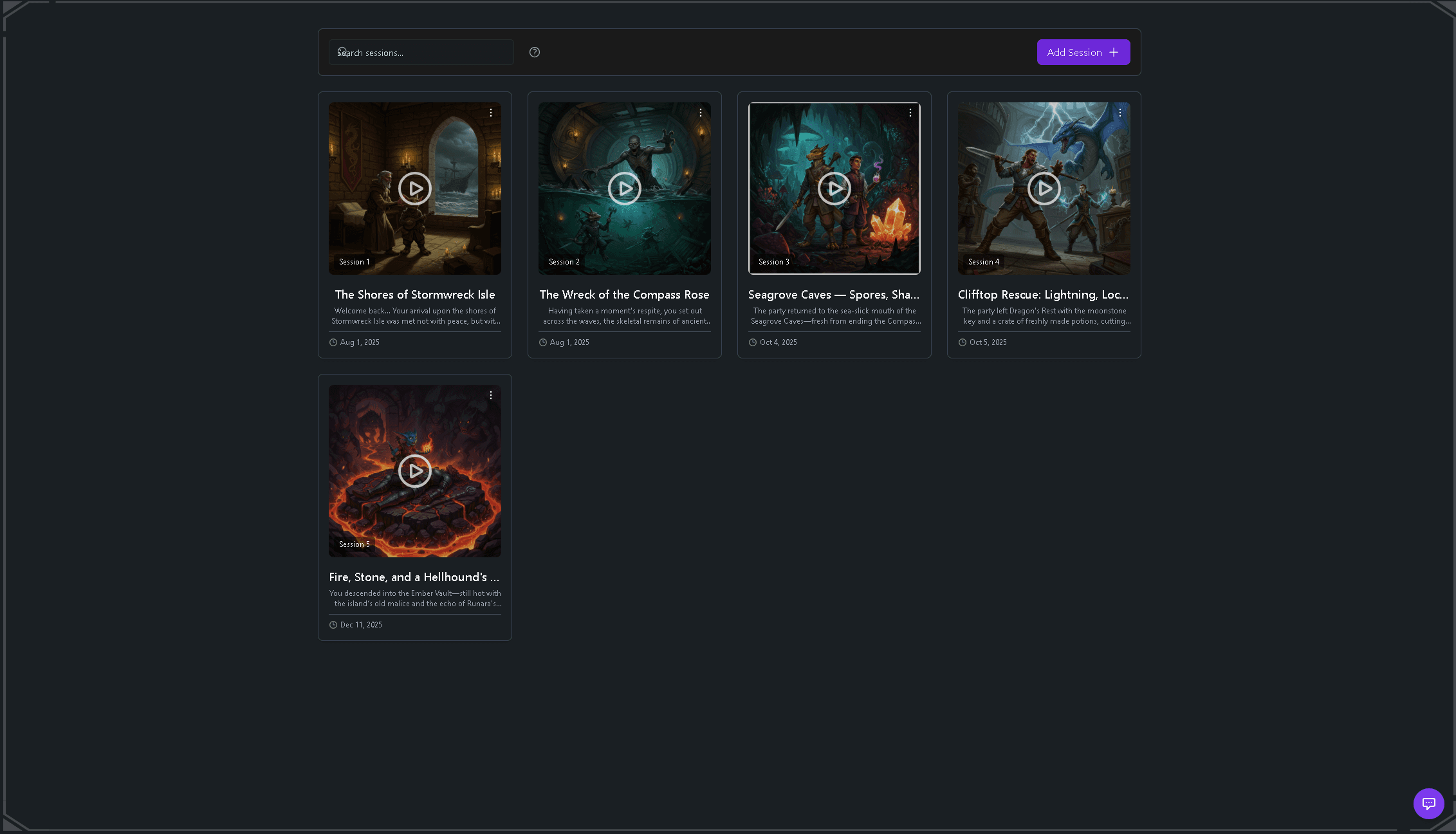
If your table records its sessions — through the Tavern Scribe VTT or the Discord bot's /record start — you don't have to reconstruct last session from memory at all. Tavern Scribe turns the recording into a written recap, a chronological event timeline, and updated quest and character records automatically, with every entry linked to the exact timestamp where it happened. Read it at the table, or let a player click through the timeline themselves while you set up the scene.
How long should the opening recap take?
Under two minutes, whichever method you pick. The recap's job is to orient the table, not re-tell the story — if you're still talking after two minutes, you've drifted into replaying the session instead of opening the next one. Methods 1, 4, and 6 above run closer to thirty seconds; round-robin and reading a written recap run longer but rarely past two minutes for a weekly group.
Which method fits your table?
Fast-paced or combat-heavy campaigns do well with the one-line "previously on" or the GM-narrated stakes version — both skip straight to what matters next. Story-heavy or role-play-forward tables often prefer round-robin or the cliffhanger replay, since the goal is re-entering the mood, not just the facts. Tables with irregular attendance — players who miss sessions often — get the most out of automation, because nobody has to reconstruct three sessions of plot from a group chat that scrolled past it weeks ago.
Skip the digging with an automatic recap
The hard part of any spoken recap isn't delivering it — it's remembering what actually happened. By week twenty, "what happened last time" can mean digging through four sessions' worth of notes — the part of session prep that quietly eats the most time. Upload your session's audio or video to Tavern Scribe and the AI builds the recap, event timeline, and quest and character updates for you, each one timestamped back to the exact moment in the recording — so a disputed detail is a ten-second clip instead of an argument. The core campaign workspace, including notes, quests, and characters, is free with no time limit; AI processing runs on silver, and every new campaign starts with 100 free silver to try it. (Pricing has the current silver and subscription details.)
Either way, the format matters less than the habit: say it out loud, every session, before the dice come out.
FAQ
How long should an opening recap take?
Aim for under two minutes. A one-line "previously on" or a GM-narrated stakes recap can run thirty seconds; a round-robin or a read-aloud written recap runs longer but should still land well under two minutes for a weekly table.
Who should give the opening recap — the GM or a player?
Either works, as long as it's consistent. Having the GM do it keeps the facts straight and the pace fast; rotating it to a player keeps everyone engaged with what happened and doubles as a light form of note-taking practice.
Does a spoken recap replace a written one?
No — they solve different problems. A written recap is a record players can check anytime; a spoken one makes sure everyone starts the session with the same facts, whether or not they read the written version. Tables that do both tend to have the fewest "wait, what?" moments.
What if nobody remembers what happened last session?
Reconstruct backward from the cliffhanger: what's the last clear thing anyone recalls, and what would have had to happen before that? Between four or five players' partial memories, the gaps usually fill in. It's the best argument for keeping some record — written or recorded — so you're not rebuilding from scratch every time.
Open your next session in two minutes, not twenty
Pick one method from the list above and use it at your very next session — it costs nothing and saves the ten minutes of cross-talk that usually eats the start of a game. If your table already records its sessions, create a free campaign and let Tavern Scribe hand you the recap and timeline before you say a word.
Drafted with AI by the Tavern Scribe team and reviewed by a person. Last reviewed 2026-11-29.
Tags: Session Recaps, Session Prep, Session Notes, Dungeon Master Tips
